
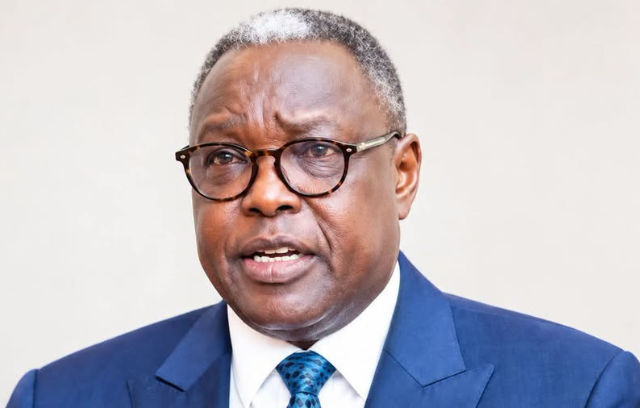
JUBA, October 21, 2026 — President Salva Kiir Mayardit has removed longtime ally Martin Elia Lomuro from his position as Minister of Cabinet Affairs, ending a political partnership that spanned two decades and making way for former Warrap State Governor Bol Wek Agoth to assume one of the government’s most influential administrative posts.
The decision, announced through presidential decrees broadcast on state television Wednesday evening, comes less than three months before South Sudan’s scheduled general elections in December and amid a broader reorganization of government institutions following the dissolution of the transitional administration in September.
No official reason was provided for the dismissal of Lomuro, one of the country’s longest-serving ministers and a key political strategist who helped coordinate government affairs under successive administrations since the signing of the 2005 Comprehensive Peace Agreement.
Political analysts say the move is significant not only because of Lomuro’s seniority but also because of his central role in managing cabinet business and acting as a principal link between the presidency and government ministries. The Ministry of Cabinet Affairs serves as the administrative nerve center of government, coordinating policy implementation and cabinet decisions.
According to political analyst Boboya James Edimond, the dismissal raises questions about the future direction of Kiir’s administration at a time when South Sudan faces mounting pressure to prepare for elections and complete unfinished provisions of the peace agreement. Edimond noted that several critical issues remain unresolved, including the drafting of a permanent constitution, implementation of security arrangements, and electoral preparedness.
Some observers have pointed to a directive issued by Lomuro a day before his removal, assigning acting ministers to oversee ministries that lacked substantive caretaker ministers. While analysts have suggested the move may have generated tensions within government circles, no evidence has emerged linking the directive directly to his dismissal, and the presidency has made no such claim.
The appointment of Bol Wek Agoth is attracting equal attention among political observers. A seasoned diplomat and administrator, Bol Wek previously served as South Sudan’s ambassador to Norway, Chief of State Protocol, Acting Chief Administrator in the Office of the President, and later Governor of Warrap State. His career has largely unfolded within institutions closely linked to the presidency.
Analysts believe Kiir’s selection of Bol Wek reflects a desire to place a trusted insider at the heart of government coordination during a politically sensitive election period. Unlike Lomuro, whose influence extended beyond the ruling SPLM through his own political party, the National Agenda, Bol Wek is primarily known as a presidential administrator whose career has been closely tied to state institutions.
The reshuffle also strengthens the presence of figures from Warrap State within the upper ranks of government. President Kiir and Bol Wek Agoth share deep political roots in Warrap, a region that has historically produced some of the country’s most influential political leaders. However, no official source has indicated that regional considerations played a role in the appointment.
For many analysts, the broader implication of the move is that Kiir may be consolidating authority ahead of the elections by surrounding himself with officials viewed as reliable administrators capable of implementing presidential directives during the transition period. The replacement of a veteran political negotiator with a presidential insider is being interpreted as part of a wider effort to tighten administrative control across government institutions.
The dismissal is particularly noteworthy because Lomuro has long been regarded as one of Kiir’s most dependable allies. Beyond his cabinet responsibilities, he represented the government in major peace negotiations, including the IGAD-led revitalization talks and later the Kenya-mediated Tumaini Initiative process. His influence extended well beyond routine government administration.
Despite his removal from cabinet, analysts do not believe Lomuro’s political career is necessarily over. As the leader of the National Agenda party and a veteran political figure with longstanding connections across government, he remains an important actor in South Sudanese politics. No announcement has been made regarding any future role for him.
Ultimately, the facts currently available suggest that the dismissal forms part of a broader pre-election restructuring rather than a publicly acknowledged dispute between the president and his longtime ally. While speculation continues regarding the reasons behind the move, the government has provided no explanation. What is clear is that President Kiir has entrusted the strategic Cabinet Affairs portfolio to Bol Wek Agoth at a decisive moment in South Sudan’s political transition, underscoring the importance of loyalty, administrative control, and electoral preparation as the country moves toward the December 2026 vote.